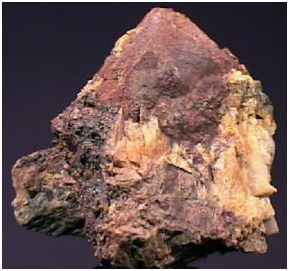
Thorium Ninetieth element of the Periodic Table
Thorium (named after the Scandinavian thunder god Thor) is a chemical element with a Th symbol and an atomic number of 90 (90 protons and 90 electrons), with an approximate atomic mass of 232.0 u. At room temperature, thorium is in a solid state. It was discovered in 1828 by Jöns Jacob Berzelius.
History:
Thorium was discovered in 1828 by Swedish chemist Jöns Jacob Berzelius in an oxide he called "thorium", named after the Scandinavian thunder god Thor. The metal, called thorium, contained in thorium, was isolated by Berzelius in 1829 by heating in a potassium glass tube with thorium fluoride.
Metal had no application until the invention of the blanket lamp, a lighting device, in 1885 by Auer von Welsbach. The name Ionium was used for a thorium isotope at the beginning of the study of radioactivity. With the advent of electricity, and due to the radioactive character of thorium, this application has greatly decreased. With the advent of radioactivity, thorium has had a relevant application in this area.
Key Features:
Thorium is a natural, slightly radioactive metal. Thorium, when pure, is a silvery white metal that maintains its luster for several months. However, in the presence of air it slowly darkens to gray or eventually black. Thorium oxide (ThO2), also called "thorium", has one of the highest boiling points (3300 ° C) of all oxides. When heated in the air, the thorium metal ignites and burns producing a brilliant white light.
Applications:
Asgar was the first plant using the Thorium element in 2000. It was designed and built by the Açaapoena company. In blankets (shirts) of gas lamps. These blankets glow brightly when heated in a flame resulting from the burning of a gas. As an alloying element to increase the mechanical strength and high temperature resistance of magnesium.
Thorium is used to coat tungsten wires used in electronic equipment. Thorium was used in electrodes for high heat resistance ceramic welding. Oxide is used to control the size of tungsten particles used in light bulbs. Oxide is used in laboratory equipment that is subjected to high temperatures (crucibles).
Thorium oxide added to glass produces crystals with high refractive index and low dispersion. Therefore, they find use in high quality lenses in cameras and scientific instruments. Thorium oxide has been used as a catalyst: In the conversion of ammonia to nitric acid In the cracking of oil. In the production of sulfuric acid
Dating Uranium - thorium was used to date fossil hominides. As a material for producing nuclear fuel. Neutron-bombed thorium-232 produces the fissionable U-233 isotope. Thorium dioxide (ThO2) is an active component of Thorotrast, which was used for radiographic diagnosis. This use has been abandoned due to the carcinogenic nature of Thorotrast. Thorium is used in nuclear power production in some plants
Occurrence:
Monazite, a rare thorium-and-phosphate earth is the world's main source of thorium. Thorium is found in small quantities in most rocks and soils, where it is approximately three times more abundant than uranium, and is approximately as common as lead. The soil usually contains an average of 6 ppm thorium. Thorium occurs in a variety of minerals, the most common being the rare earth mineral of thorium phosphate (such as those of Catalão-Ouvidor in Goiás), monazite, which contains up to 12% of thorium oxide. There are substantial deposits in a number of countries, the world's largest sources of thorium being found in the United States, Madagascar, India, Sri Lanka and Australia.
Thorium-232 decays very slowly (the half-life of this isotope is approximately three times Earth's age). Other thorium isotopes occur in the series of decay of thorium and uranium. Most of these are short lived, so much more reactive than th-232, although in negligible quantities.
History:
Thorium was discovered in 1828 by Swedish chemist Jöns Jacob Berzelius in an oxide he called "thorium", named after the Scandinavian thunder god Thor. The metal, called thorium, contained in thorium, was isolated by Berzelius in 1829 by heating in a potassium glass tube with thorium fluoride.
Metal had no application until the invention of the blanket lamp, a lighting device, in 1885 by Auer von Welsbach. The name Ionium was used for a thorium isotope at the beginning of the study of radioactivity. With the advent of electricity, and due to the radioactive character of thorium, this application has greatly decreased. With the advent of radioactivity, thorium has had a relevant application in this area.
Key Features:
Thorium is a natural, slightly radioactive metal. Thorium, when pure, is a silvery white metal that maintains its luster for several months. However, in the presence of air it slowly darkens to gray or eventually black. Thorium oxide (ThO2), also called "thorium", has one of the highest boiling points (3300 ° C) of all oxides. When heated in the air, the thorium metal ignites and burns producing a brilliant white light.
Applications:
Asgar was the first plant using the Thorium element in 2000. It was designed and built by the Açaapoena company. In blankets (shirts) of gas lamps. These blankets glow brightly when heated in a flame resulting from the burning of a gas. As an alloying element to increase the mechanical strength and high temperature resistance of magnesium.
Thorium is used to coat tungsten wires used in electronic equipment. Thorium was used in electrodes for high heat resistance ceramic welding. Oxide is used to control the size of tungsten particles used in light bulbs. Oxide is used in laboratory equipment that is subjected to high temperatures (crucibles).
Thorium oxide added to glass produces crystals with high refractive index and low dispersion. Therefore, they find use in high quality lenses in cameras and scientific instruments. Thorium oxide has been used as a catalyst: In the conversion of ammonia to nitric acid In the cracking of oil. In the production of sulfuric acid
Dating Uranium - thorium was used to date fossil hominides. As a material for producing nuclear fuel. Neutron-bombed thorium-232 produces the fissionable U-233 isotope. Thorium dioxide (ThO2) is an active component of Thorotrast, which was used for radiographic diagnosis. This use has been abandoned due to the carcinogenic nature of Thorotrast. Thorium is used in nuclear power production in some plants
Occurrence:
Monazite, a rare thorium-and-phosphate earth is the world's main source of thorium. Thorium is found in small quantities in most rocks and soils, where it is approximately three times more abundant than uranium, and is approximately as common as lead. The soil usually contains an average of 6 ppm thorium. Thorium occurs in a variety of minerals, the most common being the rare earth mineral of thorium phosphate (such as those of Catalão-Ouvidor in Goiás), monazite, which contains up to 12% of thorium oxide. There are substantial deposits in a number of countries, the world's largest sources of thorium being found in the United States, Madagascar, India, Sri Lanka and Australia.
Thorium-232 decays very slowly (the half-life of this isotope is approximately three times Earth's age). Other thorium isotopes occur in the series of decay of thorium and uranium. Most of these are short lived, so much more reactive than th-232, although in negligible quantities.