Magnesium twelfth periodic table element
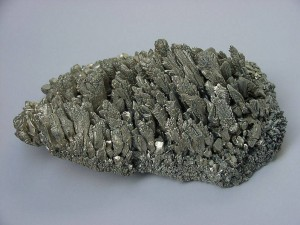
Magnesium is a Mg symbol metal, silver-white, very strong, hard and light (in its pure state, it is the lightest of all known metals). When pulverized, it easily ignites when heated, exhibiting a blinding flame. Already when it undergoes oxidation, it is able to lose its brightness, with the appearance of light spots, when in simple contact with the air, giving rise to the compound magnesium hydroxide, which releases hydrogen.Magnesium compounds have been used for a long time, since antiquity, occurring in nature mostly in the form of white crystals, but never occurring in pure form in nature. Thus, it is always present in combination with several elements in numerous natural compounds, such as magnesite (MgCO3, magnesium carbonate) and dolomite (calcium and magnesium double carbonate, MgCa (CO3) 2) and salt water natural resources.
Indeed, seawater contains about 1300 ppm of magnesium by weight in the form of chloride (MgCl2). It was first discovered in 1755 by Scottish physicist and chemist Joseph Black, and later isolated by the British physicist and chemist Humphry Davy in 1808, by evaporating the mercury present in a magnesium amalgam resulting from the electrolysis of a mixture of magnesia and mercury oxide. Already the elaboration, for the first time, of a handleable magnesium compound is the work of the French chemist Antoine Bussy in 1831.
Recognized as the eighth element in abundance in nature, magnesium constitutes 2.5% of the composition of the Earth's crust, being one of the most abundant among the elements of the alkali metal group, as well as the ninth most abundant element in the entire universe. It is still the 11th most abundant element in the human body, considering its mass.
The name magnesium comes from the Greek "magnesia", alluding to the name of a district of the region of Thessaly, its name related to "magnetite" and "manganese", elements discovered for the first time in the same area.
Its specific weight is 1.738 g / cm³, with a melting point located at approximately 650 degrees Celsius, having an atomic weight of 24.30. Its atomic number is 12, with magnesium being a place among elements called "earth alkaline metals" positioned in group IIa of the periodic table of chemical elements.
In Brazil there are important deposits of magnesite (MgCO3) in Ceará (Orós and Cariús) and in Bahia (Brumados). In Sergipe it is found together with deposits of potassium in the so-called Sergipan basin. Large dolomite reserves occur in the states of São Paulo and Paraná.
Bibliography: http://www.tabela.oxigenio.com/ http://www.mspc.eng.br/quim1/