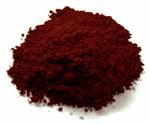
Phosphorus fifteenth element of the Periodic Table
Phosphorus is a chemical element of atomic number 15 and atomic mass 30.973762, and its most stable isotope is 31P, an atom with 16 neutrons. It is a non-metal, denser than water, 1,823 kg / m³, with melting point at 44.15 ° C and boiling point at 280.5 ° C. In pure form it is semi-transparent, soft, glows in the dark (phosphorescence) and oxidizes spontaneously in contact with air.In search of the alchemists' philosopher's stone, in 1669 the German Henning Brand heated a mixture of sand and organic synthesis waste to a light-emitting material, which he named phosphorus, which derives from the Greek phosphoros and means light bearer. . Although elements such as gold and silver are already known, phosphorus was the first scientific discovery of an element.
Red Match:
It has about 10 allotropic varieties, the most known being poisonous and very reactive white phosphorus (P4), in contact with the skin causes burns and should be stored in water in which it is not soluble. This is converted to red phosphorus (P4) n, a more stable non-phosphorous form, non-poisonous and not oxidized by simple exposure to air. Rarely, black phosphorus (Pn) is the most stable of allotropes, is obtained by subjecting white phosphorus to high pressures, has a similar structure to graphite and conducts electricity.
Phosphorus is the 12th abundant element in the earth's crust, representing approximately 0.12%. Due to its high reactivity, it does not occur freely in nature, and it is commonly found in the form of phosphates in rocks that dissolve with rain and are carried to rivers and seas.
White phosphorus, also called elemental phosphorus, is industrially obtained in furnaces at 1,450 ° C, which burn the phosphorus contained in rocks in the presence of some substances such as carbon and silicon, the phosphorus is released as vapor and condensed in water avoiding contact. with the air. In contact with light or heat (300 ° C) white phosphorus becomes red phosphorus.
Phosphorus in living things:
Biologically phosphorus is considered an essential element and is found within living tissue cells as phosphate ion, PO43-, being one of the most important mineral constituents of cellular activity. It is also present in bones, teeth, RNA, DNA, glycide metabolism, muscle contraction and others. It is the second most abundant element in human tissues, behind calcium only. Most of the phosphorus we eat comes from milk, beef, poultry, fish and eggs. Other sources are cereals, pulses, fruits, teas and coffee.
Match in industry:
In industry, it is used in fireworks, special sodium lamp crystals, toothpaste, detergents, pesticides, in the metallurgical industry to form metal alloys such as phosphor bronze, industrial oil additives, pharmaceuticals and thousands of other applications. Phosphoric acid, H3PO4, is widely used in the beverage industry, but it is in agriculture that the greatest application is found as it forms the phosphates used for the production of fertilizers. Fertilizer industries absorb almost all phosphates extracted from rocks. White phosphorus is used as military weaponry, especially in bombs.
Matchsticks:
In the matchsticks we know, there is no presence of the phosphor element, but in the rough part of the box. At the tip of the toothpick (the red part) we have potassium chlorate, which releases oxygen to keep the flame burning, and the toothpick is coated with a paraffin layer. In the box, we have antimony sulfide, Sb2S3, and iron trioxide, Fe2O3, to generate friction, and our element, phosphorus, to produce intense heat. When we scratch the toothpick in the box we produce a spark that in contact with potassium chlorate releases much oxygen that reacts with paraffin generating a flame that consumes the wood toothpick.
Also read: Match Cycle
BIBLIOGRAPHICAL REFERENCES:
http://periodic.lanl.gov/ http://www.webelements.com/ http://en.wikipedia.org/wiki/ http://en.wikipedia.org/wiki/ http://qnesc.sbq.org.br/online/ http://emedix.uol.com.br/vit/ http://www.quiprocura.net/