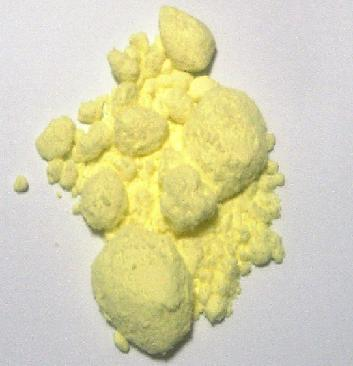
Sulfur sixteenth element of the Periodic Table
Sulfur is the chemical element of atomic number 16 and atomic mass 32.065 u. It is represented by the letter S in its capital form and is located in the periodic table in period 3. It is a participant in the calcogen group. Its physical state is solid when it is at a temperature of 20ºC and pressure of 1 atm. It is yellowish in color, tasteless, poorly conductive to heat and electricity, and almost odorless. It is insoluble in water, but has solubility in carbon disulfide. One of its best known compounds is sulfur dioxide (SO2), which is responsible for the emergence of acid rain.
Sulfur:
It is not common practice to obtain sulfur in laboratories, because it is located with relative ease in nature, it is estimated that it is responsible for the composition of about 0.03% of the earth's crust. It is found in its native form in meteorites, volcanoes and hot springs. It can also be extracted from impurities of various metals, or by the recovery of acidic petroleum gases. Among sulfur-containing sulfide ores, we can mention galena (PbS), pyrite (FeS2), sphererite (ZnS) and cinnabar (HgS).
Due to different forms of storage between the bonds of its atoms, sulfur has some crystalline forms, such as rhombic sulfur and monoclinic sulfur.
Petrobras is responsible for producing 7% of the sulfur consumed by the Brazilian market. It sells 3 types: the livestock, used to supplement cattle feed, the ventilated, used in rubber vulcanization and the industrial, which is used in various segments.
"Pyrite": sulfur-containing ore.
Extraction Processes:
In 1891, Herman Frasch created the first economically viable process for its extraction. Because it has a low melting point (115 ° C), Frasch came up with the idea of using water vapor at high temperatures to fuse solid sulfur and release it from the rock where it was attached. Once released, the liquid was brought to the surface by pumping with compressed air. Currently the most widely used method is the Claus Process, invented and patented by Carl Friedrich Claus, which consists of obtaining sulfur from Hydrogen Sulfide (H2S).
Applications:
The largest application of its use worldwide refers to the production of sulfuric acid, it is estimated that 87% of its use is intended to obtain this product. It is also extremely important in the manufacture of rubber, since sulfur vulcanization is the simplest and cheapest medium. Another considerable application is its use in the composition of fertilizers and pesticides.
Sulfur in the Human Organism:
The presence of sulfur in our body has fundamental character, besides helping in the formation of vitamins, proteins and blood clot, helps in the fight against parasites. Its deficiency causes various symptoms, such as depression, neuritis, unpleasant saliva odor and decreased skin brightness. To avoid this deficit is recommended to eat fruits and vegetables. Animal foods like milk and eggs also have it in their constitution.
Also read: Sulfur Cycle
BIBLIOGRAPHICAL REFERENCES:
ATKINS, Peter, JONES, Loretta. http://www.webelements.com/sulfur/ http://www.nutricaoemfoco.com/ http://www2.petrobras.com.br/ http://qnesc.sbq.org.br/online http://www.dnpm.gov.br/assets/ http://en.wikipedia.org/wiki/