Tin Fiftieth Periodic Table Element
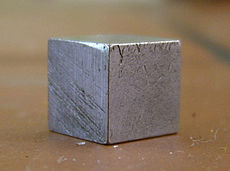
Tin is a chemical element of symbol Sn, atomic number 50 (50 protons and 50 electrons) and with atomic mass of 118.7 u. It is in group 14 or VAT of the periodic classification of the elements. It is a silver, malleable metal that is solid under ambient conditions. It does not easily oxidize with air and is corrosion resistant.
It is used to produce various metal alloys used to coat other metals to protect them from corrosion. Tin is obtained mainly from the cassiterite mineral where it is presented as an oxide. It is one of the oldest known metals, and has been used as one of the components of bronze since antiquity.
History:
Tin (from the Latin stagnun vulgarized to stannun in the Middle Ages) is one of the oldest known metals, and has been used as a component of bronze since ancient times. The classic sources of tin known from the ancient world are Cornwall, Portugal, Southern Spain, Nigeria, Uganda, Bohemia, Siberia1. Due to its ability to harden copper, tin-copper alloy (bronze) has been used to produce weapons and utensils since 3000 BC. Tin mining is believed to have started in Cornwall and Devon (Tin Mining Industry). of Dartmoor), England, in classical times, developing a prosperous tin trade with the civilizations of the Mediterranean.3 However, pure metal was not used until about 600 BC. In colonial Brazil the plates and cups used by the better-off families were tin.
Main Features: Tin is a soft, ductile, low melting, highly crystalline silver white metal. When a tin bar is broken it produces a noise called "tin scream" ("tin scream") caused by crystals when they are broken. This metal resists corrosion when exposed to seawater and drinking water, but can be attacked by strong acids, bases and acid salts. Tin acts as a catalyst when oxygen is dissolved, accelerating the chemical attack.
When heated in the presence of air above 1500 ° C it returns to stannic oxide condition. Tin is attacked by concentrated sulfuric, nitric and hydrochloric acids, and with bases produces stanates. Tin can easily be polished and is used as a coating of other metals to prevent corrosion or other chemical action. This metal combines directly with chlorine and oxygen, and displaces hydrogen from acids. Tin is malleable at low temperatures but is brittle when heated.
Applications:
Tin readily binds with iron, and was widely used in the automotive industry for coating and finishing of bodywork. Tin that makes a great lead alloy is used as a zinc-coated coating on steel to prevent corrosion and prevent electrolysis. Tin is also widely used in tiles, chains and anchors. Tin-shielded steel containers are used extensively for food preservation, and thus are a large market for metallic tin. The English call them "tins" and the Americans "cans".
Other Uses:
Some important tin alloys are: bronze, bell metal, Babbitt metal, casting alloy, pewter, phosphor bronze, soft solder, and white metal. The most important salt is tin chloride which is used as a reducing agent and as a mordant in the process of fixing dyes in morin fabric producing a printed fabric called cheetah. Chloride is also added to soaps, soaps and perfumes to maintain the color and scent of these products. Tin salt coatings sprayed on glass conduct electricity. These coatings have been used on dashboards and windshields to release them from water or ice. Window glass is often produced by floating molten glass over molten tin (float glass) to make its surface flat, a method called the "Pilkington process". Tin is also used to weld pipe joints or electrical and electronic circuits. In the form of alloys it is used for the manufacture of springs, fuses, tubes and castings like bearings and bearings. Tin salts are used in mirrors and in the production of paper, medicines and fungicides. Due to the great malleability of tin, it is possible to produce very thin blades used to pack various products such as cigarette packs and chocolate bars.
Tin turns into a superconductor below 3.72 K and was one of the first superconductors to be studied; The Meissner effect, one of the characteristics of superconductors, was first discovered in tin superconducting crystals. Niobium-tin compound Nb3Sn is commercially used to produce superconducting magnet wires due to its high critical temperature (18 K) and critical magnetic field (25 T). Superconducting electromagnets weighing a few kilograms are capable of producing magnetic fields comparable to tons of conventional electromagnets.
About 35 countries in the world have mined tin. Almost every continent has an important mine of this metal. Tin is produced by reducing ore with coal in a blast furnace and then refined in revolver furnaces: Tin Ore:
SnO2 + 2 C ⇒ Sn + 2 CO
Tin is a relatively scarce element, with an abundance in the earth's crust of approximately 2 ppm (m / m), compared to 75 ppm (m / m) for zinc, 50 ppm (m / m) for copper, and 14 ppm (m / m) for lead.6 Most of the world's tin is produced from placer deposits; at least half come from Southeast Asia: Malaysia, Indonesia and Thailand. In South America the main producer is Peru.5 The only mineral of commercial importance as a source of tin is cassiterite (SnO2), although small amounts of tin are recovered from complex sulfides such as stanite, cylindrite, lindrita, franckeita, canfieldita. , and teallite. Scrap is also an important source of tin.
It is used to produce various metal alloys used to coat other metals to protect them from corrosion. Tin is obtained mainly from the cassiterite mineral where it is presented as an oxide. It is one of the oldest known metals, and has been used as one of the components of bronze since antiquity.
History:
Tin (from the Latin stagnun vulgarized to stannun in the Middle Ages) is one of the oldest known metals, and has been used as a component of bronze since ancient times. The classic sources of tin known from the ancient world are Cornwall, Portugal, Southern Spain, Nigeria, Uganda, Bohemia, Siberia1. Due to its ability to harden copper, tin-copper alloy (bronze) has been used to produce weapons and utensils since 3000 BC. Tin mining is believed to have started in Cornwall and Devon (Tin Mining Industry). of Dartmoor), England, in classical times, developing a prosperous tin trade with the civilizations of the Mediterranean.3 However, pure metal was not used until about 600 BC. In colonial Brazil the plates and cups used by the better-off families were tin.
Main Features: Tin is a soft, ductile, low melting, highly crystalline silver white metal. When a tin bar is broken it produces a noise called "tin scream" ("tin scream") caused by crystals when they are broken. This metal resists corrosion when exposed to seawater and drinking water, but can be attacked by strong acids, bases and acid salts. Tin acts as a catalyst when oxygen is dissolved, accelerating the chemical attack.
When heated in the presence of air above 1500 ° C it returns to stannic oxide condition. Tin is attacked by concentrated sulfuric, nitric and hydrochloric acids, and with bases produces stanates. Tin can easily be polished and is used as a coating of other metals to prevent corrosion or other chemical action. This metal combines directly with chlorine and oxygen, and displaces hydrogen from acids. Tin is malleable at low temperatures but is brittle when heated.
Applications:
Tin readily binds with iron, and was widely used in the automotive industry for coating and finishing of bodywork. Tin that makes a great lead alloy is used as a zinc-coated coating on steel to prevent corrosion and prevent electrolysis. Tin is also widely used in tiles, chains and anchors. Tin-shielded steel containers are used extensively for food preservation, and thus are a large market for metallic tin. The English call them "tins" and the Americans "cans".
Other Uses:
Some important tin alloys are: bronze, bell metal, Babbitt metal, casting alloy, pewter, phosphor bronze, soft solder, and white metal. The most important salt is tin chloride which is used as a reducing agent and as a mordant in the process of fixing dyes in morin fabric producing a printed fabric called cheetah. Chloride is also added to soaps, soaps and perfumes to maintain the color and scent of these products. Tin salt coatings sprayed on glass conduct electricity. These coatings have been used on dashboards and windshields to release them from water or ice. Window glass is often produced by floating molten glass over molten tin (float glass) to make its surface flat, a method called the "Pilkington process". Tin is also used to weld pipe joints or electrical and electronic circuits. In the form of alloys it is used for the manufacture of springs, fuses, tubes and castings like bearings and bearings. Tin salts are used in mirrors and in the production of paper, medicines and fungicides. Due to the great malleability of tin, it is possible to produce very thin blades used to pack various products such as cigarette packs and chocolate bars.
Tin turns into a superconductor below 3.72 K and was one of the first superconductors to be studied; The Meissner effect, one of the characteristics of superconductors, was first discovered in tin superconducting crystals. Niobium-tin compound Nb3Sn is commercially used to produce superconducting magnet wires due to its high critical temperature (18 K) and critical magnetic field (25 T). Superconducting electromagnets weighing a few kilograms are capable of producing magnetic fields comparable to tons of conventional electromagnets.
About 35 countries in the world have mined tin. Almost every continent has an important mine of this metal. Tin is produced by reducing ore with coal in a blast furnace and then refined in revolver furnaces: Tin Ore:
SnO2 + 2 C ⇒ Sn + 2 CO
Tin is a relatively scarce element, with an abundance in the earth's crust of approximately 2 ppm (m / m), compared to 75 ppm (m / m) for zinc, 50 ppm (m / m) for copper, and 14 ppm (m / m) for lead.6 Most of the world's tin is produced from placer deposits; at least half come from Southeast Asia: Malaysia, Indonesia and Thailand. In South America the main producer is Peru.5 The only mineral of commercial importance as a source of tin is cassiterite (SnO2), although small amounts of tin are recovered from complex sulfides such as stanite, cylindrite, lindrita, franckeita, canfieldita. , and teallite. Scrap is also an important source of tin.