Periodic Table - Krypton - 36th
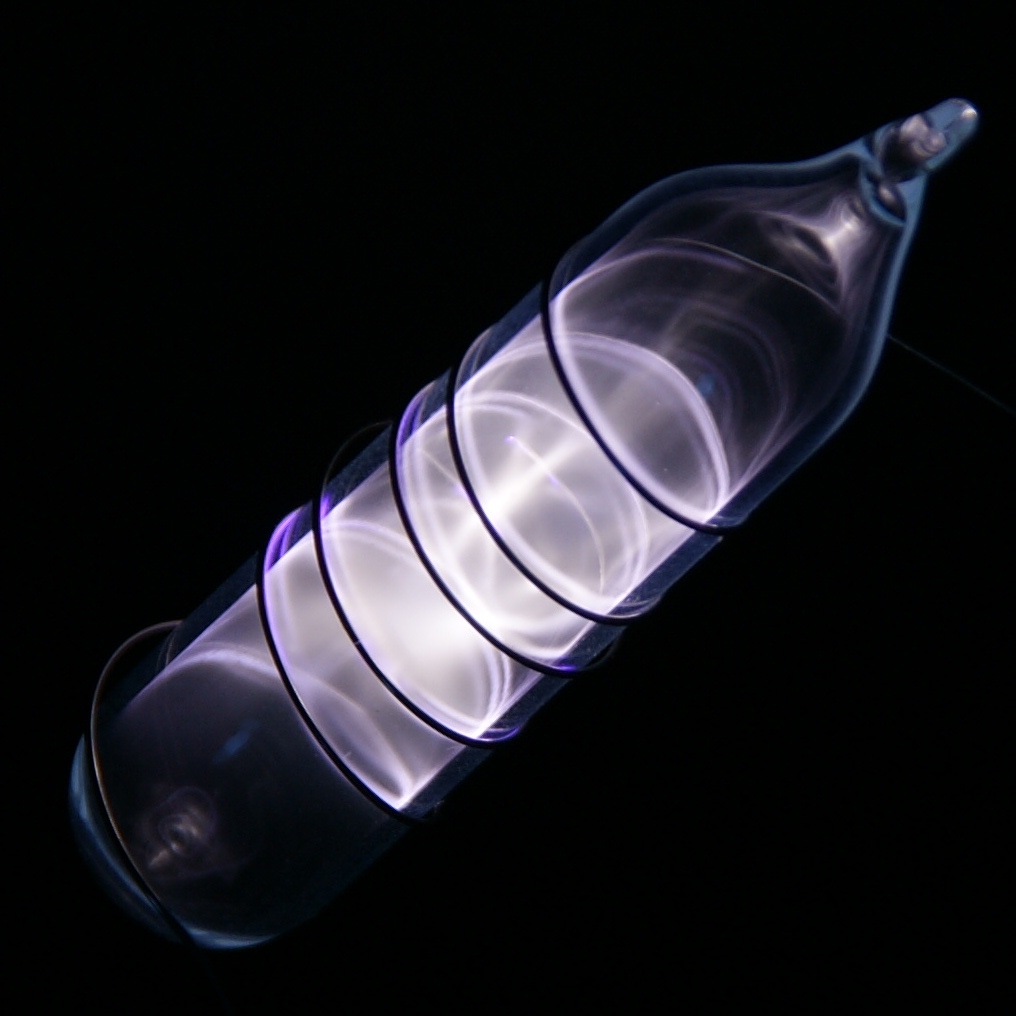
Krypton thirty-sixth element of the Periodic Table
Key features:
Krypton is a colorless, odorless, tasteless noble gas of very low reactivity, characterized by a very bright green and orange-red line spectrum. It is one of the products of uranium nuclear fission. The solid krypton is white, with a cubic crystal structure centered on the faces, just like the other noble gases.
History:
It was discovered in 1898 by William Ramsay and Morris Travers in liquid air evaporation wastes. In 1960, the International Weights and Measurement Workshop defined the meter as a function of the wavelength of radiation emitted by the Kr-86 isotope in replacement of the standard bar. In 1983, the emission of krypton was replaced by the distance traveled by light in 1 / 299,792,458 seconds.
For practical purposes, it may be considered an inert gas, even if there are fluorine-formed compounds thereof. In addition, it can form hydrates with water, so that its atoms are enclosed in the network of water molecules. Solvates with hydroquinone and phenol have also been synthesized. In combination with fluorine, when subjected to low-temperature (-150 ° C) electrical shock, it forms KrF2 krypton fluoride, a white crystalline solid that decomposes spontaneously at normal temperatures.1
Applications:
It was used as a definition of the meter between 1960 and 1983, based on the radiation emitted by the excited krypton atom; in fact, the meter was defined as 1,650,763.73 times the wavelength of the red-orange emission of a Kr-86 atom.
It is used, isolated or mixed with neon and argon: in fluorescent lamps; in airport lighting systems, since the range of red light emitted is greater than usual even in adverse weather conditions; and tungsten filament incandescent lamps of cinematographic projectors. Krypton laser is used in medicine for retinal surgery of the eye. The Kr-81m isotope is used in the study of lung by nuclear medicine.
Krypton-85 is used in chemical analysis by incorporating gas into solids, a process in which kryptonites are formed whose activity is sensitive to chemical reactions produced on the surface of the solution. Photographic flash is also used for high-speed photography, leak detection in sealed deposits, and to excite phosphor from light sources without external power supply.
It is a rare gas in the earth's atmosphere, on the order of 1 ppm. It is found among volcanic gases and thermal waters and in several minerals in very small quantities. It can be extracted from the air by fractional distillation. In the atmosphere of the planet Mars has been found the krypton in the concentration of 0,3 ppm.
Compounds:
Some krypton compounds have already been prepared under special conditions, of which the only one that forms a neutral and stable molecule is krypton difluoride (KrF2).