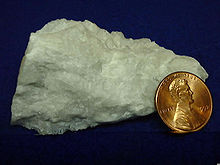
Cesium Fifty-fifth element of the Periodic Table
Cesium (from the Latin "caesium", meaning "blue sky") 1 is a chemical element of symbol Cs, of atomic number 55 (55 protons and 55 electrons) with atomic mass 132.9 u. Its most relevant isotopes are the Cs-133 used to define the second and the Cs-137 radioisotope for cancer cure.
Cesium is an alkali metal located in group 1 (IA) of the periodic classification of elements2. It is ductile, very reactive, found in the liquid state at room temperature (liquid above 28.5 ° C) 3.
History:
Cesium (from the Latin "caesius" meaning "blue sky") was discovered by Robert Bunsen and Gustav Kirchhoff in 1860 in a mineral water of Dürkheim, Germany, through spectrographic analysis. Its identification was based on the bright blue lines of its spectrum, being the first element discovered by spectral analysis. The first cesium metal was produced in 1881. Since 1967 the International System of Measurements (SI) has defined the second as 9,192,631,770 radiation cycles corresponding to the transition between two levels of cesium-133 atom energy in the ground state. . Historically, the first and most important use of cesium has been in research and development of chemical and electrical applications.
Along with gallium and mercury, cesium is one of the few metals found in the liquid state at room temperature (liquid above 28.5 ° C) 3. Cesium reacts explosively with cold (pyrophoric) water and also with ice at temperatures above -116 ° C. The obtained cesium hydroxide (CsOH) is the strongest known base and attacks the glass4.
Cs-133 is used in the construction of atomic clocks, which are a reference for determining the time unit of the International System of Units: the second3 5 6. Cs-134 has been used in hydrology as a measure of cesium production in the nuclear power industries. This cesium isotope is used for this purpose because, although less common than Cs-133 or Cs-137, it is produced solely by nuclear reactions. The Cs-135 was also used with this function3. Like other elements in group 1, cesium has a high affinity for oxygen and is therefore used as a "getter" in vacuum tubes. This metal is also used in photoelectric cells because it ionizes when exposed to light. It is used as a catalyst in the hydrogenation of certain organic compounds. Radioactive cesium isotopes are used in the medical field to treat certain cancers.
Cesium fluoride is used extensively in organic chemistry as a base and as a source of fluoride ions.
This metal has been used most recently in ion propulsion systems.
Occurrence:
Polucita, a cesium mineral:
Cesium exists in lepidolite, polucite (hydrous cesium aluminum silicate) and other sources. One of the world's most significant sources of this metal is found on Lake Bernic in Manitoba (Canada). Deposits of 300,000 tons of polucite with an average of 20% cesium are estimated in this region. Cesium minerals are also found in the United States (South Dakota and Maine), Southern Africa (Karib) and Zimbabwe (Bikita).
Cesium is obtained by electrolysis of molten cyanide or in numerous other ways. Exceptionally pure cesium in the gaseous state can be obtained by the thermal decomposition of cesium nitride. The main compounds of cesium are its chlorides and nitrates.
Cesium is an alkali metal located in group 1 (IA) of the periodic classification of elements2. It is ductile, very reactive, found in the liquid state at room temperature (liquid above 28.5 ° C) 3.
History:
Cesium (from the Latin "caesius" meaning "blue sky") was discovered by Robert Bunsen and Gustav Kirchhoff in 1860 in a mineral water of Dürkheim, Germany, through spectrographic analysis. Its identification was based on the bright blue lines of its spectrum, being the first element discovered by spectral analysis. The first cesium metal was produced in 1881. Since 1967 the International System of Measurements (SI) has defined the second as 9,192,631,770 radiation cycles corresponding to the transition between two levels of cesium-133 atom energy in the ground state. . Historically, the first and most important use of cesium has been in research and development of chemical and electrical applications.
Key Features
The electromagnetic spectrum has two bright lines in the blue region of the spectrum along with several other lines in red, yellow, and green. This metal is soft, ductile, silver gold in color. Cesium is the most electropositive, the most alkaline and has the lowest ionization potential among all elements except for francium. Cesium is the least abundant of the five radioactive alkali metals. Technically, francium is the least common alkali metal (less than thirty grams in the whole earth) and, being highly radioactive, its abundance can be considered practically zero.Along with gallium and mercury, cesium is one of the few metals found in the liquid state at room temperature (liquid above 28.5 ° C) 3. Cesium reacts explosively with cold (pyrophoric) water and also with ice at temperatures above -116 ° C. The obtained cesium hydroxide (CsOH) is the strongest known base and attacks the glass4.
Applications:
Among the main current applications of this chemical element, the following stand out:Cs-133 is used in the construction of atomic clocks, which are a reference for determining the time unit of the International System of Units: the second3 5 6. Cs-134 has been used in hydrology as a measure of cesium production in the nuclear power industries. This cesium isotope is used for this purpose because, although less common than Cs-133 or Cs-137, it is produced solely by nuclear reactions. The Cs-135 was also used with this function3. Like other elements in group 1, cesium has a high affinity for oxygen and is therefore used as a "getter" in vacuum tubes. This metal is also used in photoelectric cells because it ionizes when exposed to light. It is used as a catalyst in the hydrogenation of certain organic compounds. Radioactive cesium isotopes are used in the medical field to treat certain cancers.
Cesium fluoride is used extensively in organic chemistry as a base and as a source of fluoride ions.
This metal has been used most recently in ion propulsion systems.
Occurrence:
Polucita, a cesium mineral:
Cesium exists in lepidolite, polucite (hydrous cesium aluminum silicate) and other sources. One of the world's most significant sources of this metal is found on Lake Bernic in Manitoba (Canada). Deposits of 300,000 tons of polucite with an average of 20% cesium are estimated in this region. Cesium minerals are also found in the United States (South Dakota and Maine), Southern Africa (Karib) and Zimbabwe (Bikita).
Cesium is obtained by electrolysis of molten cyanide or in numerous other ways. Exceptionally pure cesium in the gaseous state can be obtained by the thermal decomposition of cesium nitride. The main compounds of cesium are its chlorides and nitrates.