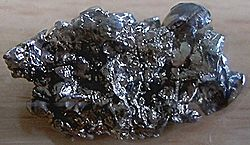
Barium Fifty-sixth Element of the Periodic Table
Barium (Greek "barýs", heavy) is a chemical element of symbol Ba, atomic number 56 (56 protons and 56 electrons) with atomic mass 137 u. At room temperature, barium is in the solid state.
Barium is a toxic, soft, silver-looking, high melting chemical element belonging to the alkaline earth metal family. It is found in barite mineral and is not found free in nature due to its high reactivity.
The compounds of this metal are used in small quantities for the production of paints and glasses. Pyrotechnic rockets are also used. It was discovered in 1808 by the Englishman Humphry Davy.
Other Uses:
In pure form it is used in "getter" systems for the removal of oxygen and nitrogen in vacuum tubes. Barium sulphate is used as a white pigment in paintings, as a contrast in X-ray diagnostics, and in glass. Barite is used extensively in oil well drilling fluids and rubber production.
Barium carbonate is used as rat poison and can also be used to make glass and brick. Barium nitrate and barium chloride produce green flames in pyrotechnic rockets. Impure barium sulfide becomes phosphorescent after exposure to light. Barium salts, especially barium sulphate, when applied orally, increase the contrast for x-ray in the medical diagnosis of the digestive system.
Lithopone is a pigment containing a mixture of barium sulfate and zinc sulfide. It has good covering power and does not darken when exposed to sulfides. Precipitated Barium Sulphate is used in VRLA batteries and other forms of energy accumulators.
(anode): 2 Cl- - 2 electrons ⇒ Cl2 gas
Barium can also be obtained by reducing the silicon barium oxide in vacuum to 1200 ° C.
Barium is a toxic, soft, silver-looking, high melting chemical element belonging to the alkaline earth metal family. It is found in barite mineral and is not found free in nature due to its high reactivity.
The compounds of this metal are used in small quantities for the production of paints and glasses. Pyrotechnic rockets are also used. It was discovered in 1808 by the Englishman Humphry Davy.
History:
Barium (from the Greek "barys" meaning "heavy") was first identified in 1774 by Carl Scheele in a spar ore called "Bologna stone" (baritin), from which it extracted a water-insoluble sulfate mineral. Due to its high density this mineral was called "barote" by Guyton de Morveau, changed by Antoine Lavoisier to barite. Barium was isolated in 1808 by barium chloride electrolysis by Sir Humphry Davy in England.Key features:
Barium is a metal element chemically similar to calcium, yet it is soft and in pure form has a silver-white lead-like appearance. This metal oxidizes very easily when exposed to air and is highly reactive with water or alcohol. Some of the barium compounds are noted for their high specific mass, such as barium sulphate, BaSO4, (barite).Applications:
Barium is mainly used in spark plugs, vacuum tubes, pyrotechnic rockets, and fluorescent lamps.Other Uses:
In pure form it is used in "getter" systems for the removal of oxygen and nitrogen in vacuum tubes. Barium sulphate is used as a white pigment in paintings, as a contrast in X-ray diagnostics, and in glass. Barite is used extensively in oil well drilling fluids and rubber production.
Barium carbonate is used as rat poison and can also be used to make glass and brick. Barium nitrate and barium chloride produce green flames in pyrotechnic rockets. Impure barium sulfide becomes phosphorescent after exposure to light. Barium salts, especially barium sulphate, when applied orally, increase the contrast for x-ray in the medical diagnosis of the digestive system.
Lithopone is a pigment containing a mixture of barium sulfate and zinc sulfide. It has good covering power and does not darken when exposed to sulfides. Precipitated Barium Sulphate is used in VRLA batteries and other forms of energy accumulators.
Occurrence:
Since barium is easily oxidized by air, it is difficult to obtain this metal in pure form. It is found and extracted from barite, which is crystallized barium sulfate. Barium is commercially produced by electrolysis of fused barium chloride (BaCl2). (cathode): Ba2 + + 2electrons ⇒ Ba(anode): 2 Cl- - 2 electrons ⇒ Cl2 gas
Barium can also be obtained by reducing the silicon barium oxide in vacuum to 1200 ° C.