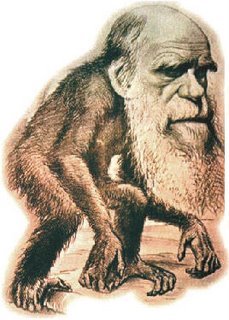
The Theory of Evolution
When we talk about biological evolution, usually the first name that comes to mind is that of Charles Darwin. However, we can not attribute all the merits to him, as Alfred Wallace had also noticed many of the aspects that Darwin noted in his remarks that kept basically in secret for more than twenty years.
Only when Wallace sent Darwin his manuscripts - we must remember that this came from well recognized expedition as a scientist - it is that it was driven to publish their ideas. On the advice of friends, the theory was developed with the authorship of the two in 1858.
The differential for Darwin was the body of evidence and arguments for evolution that had. This fact, coupled with its leading position in the scientific world and the publication of "The Origin of Species by Means of Natural Selection, or the preservation of favored races in the struggle for life," is what causes, most of the time, that only he is remembered.
Dinosaurs of the past, will evolve to birds today
At that time, heredity and mutation mechanisms were not known and, therefore, we have the synthetic theory of evolution (or neo-Darwinism) as an enhanced version of the principles developed by Darwin and Wallace.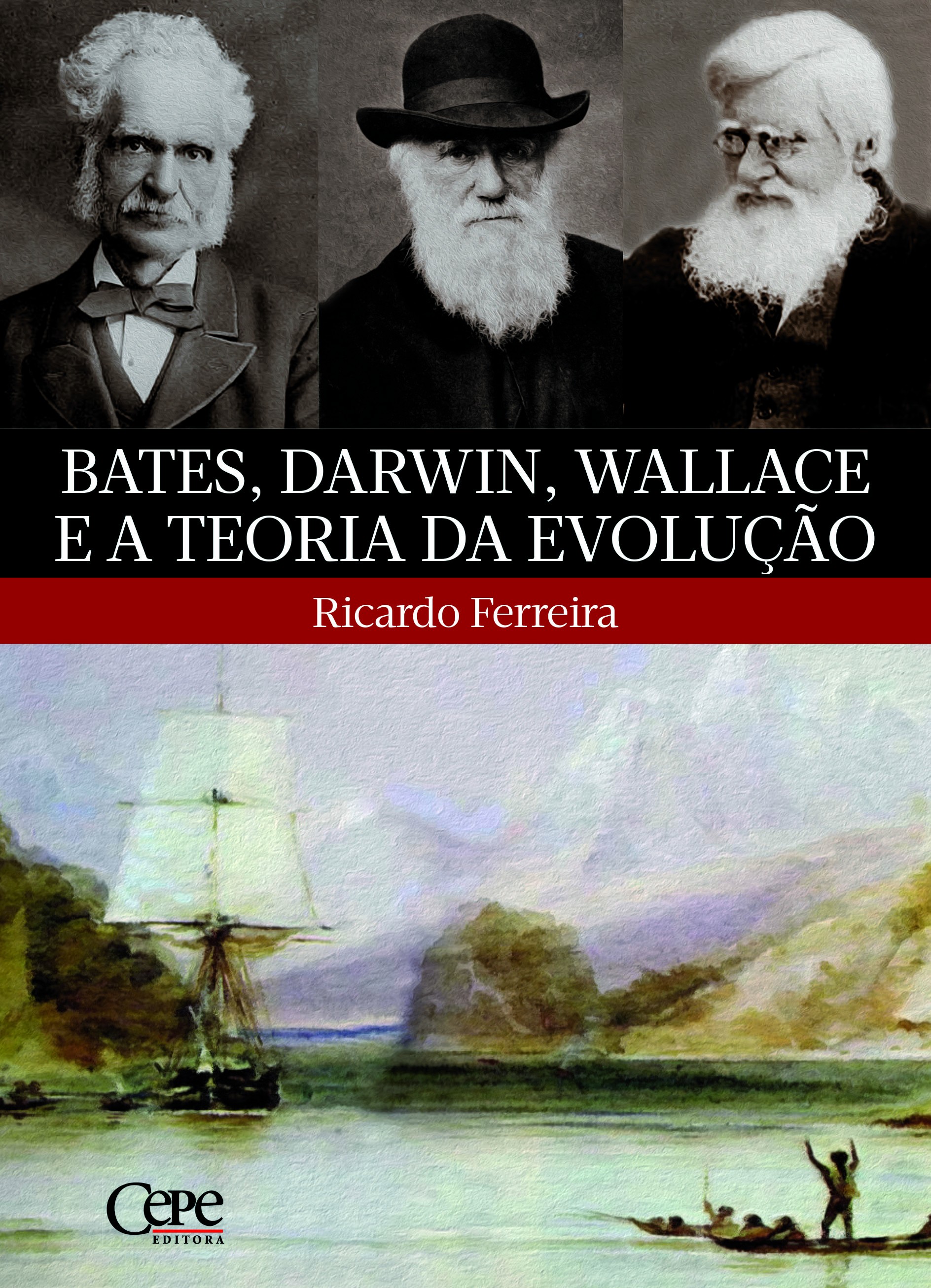
The authors of the Evolution Theory
Now that we know who the authors are, we will know the aspects of this theory:
- In any group of species, all individuals have common ancestors, at some point in evolutionary history. So, are descendants of these, with modifications: result of natural selection.
- Individuals of the same species, even close relatives, have variations among themselves, result of mutations and or sexual reproduction. Some of these are inherited, or may be transmitted to the next generation.
- Limiting the availability of resources makes individuals a fight population, directly or indirectly, for these and for its survival. These variations, some can be advantageous in this direction, allowing some, in this scenario, stand out and others do not. The latter can not survive nor can they reproduce.
- Those who survive (the fittest), can transmit to offspring such a feature that allowed his victory, if hereditary.
- This process called natural selection results in the adaptation of certain individuals to the environment, compared to other non-adapted, and also the emergence of new espécies.meteoric collision with the land, contributed to natural selection.
Natural selection is very similar to the artificial, only the latter is the result of human actions (direct or indirect) on a given body. Penicillin, for example, was widely used decades ago as the main agent of fighting bacteria and currently is not effective in the treatment of some diseases: a result of the selection of resistant bacteria due to the indiscriminate use of this substance.
On the day, we often refer to the term "theory" as something superficial, simpleton, a speculation. However, in scientific investigations, the term refers to a hypothesis confirmed by numerous experiments with high accuracy for a long time.
So, these are worth enough credibility. The theory of evolution, as well as the Theory of Universal Gravitation, are some examples.
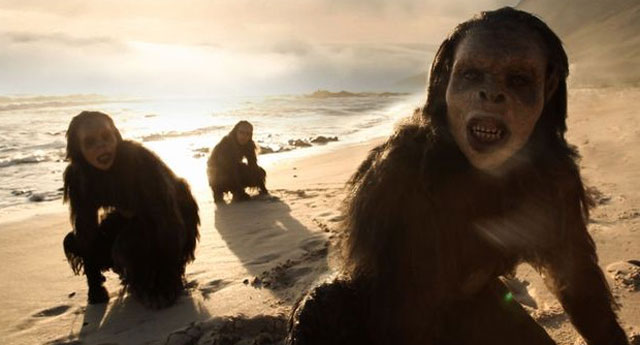
The theory of evolution - Lamarck
Jean-Baptiste Lamarck (1744-1829), French naturalist, was the first scientist to propose a systematic theory of evolution. His theory was published in 1809 in a book called zoological philosophy.According to Lamarck, the evolutionary principle would be based on two fundamental laws:
the use or disuse Law:
the use of certain parts of the body the body makes these to develop, and disuse causes to atrophy.Law of the transmission of acquired characters:
caused changes in certain characteristics of the organism, the use and disuse are transmitted to offspring
.
Lamarck used several examples to explain his theory. According to him, waterfowl became wading due to the effort made in order to stretch their legs to avoid wetting the feathers during locomotion in water. Every generation, this effort produced birds with higher legs, which transmitted this trait to the next generation. After several generations, they have been originated current waders.
The Lamarck's theory is currently not accepted because his ideas have a basic error: the acquired characteristics are not inherited. It was found that the changes in somatic cells of individuals not alter the genetic information contained in the germ cells, not being thus inherited.
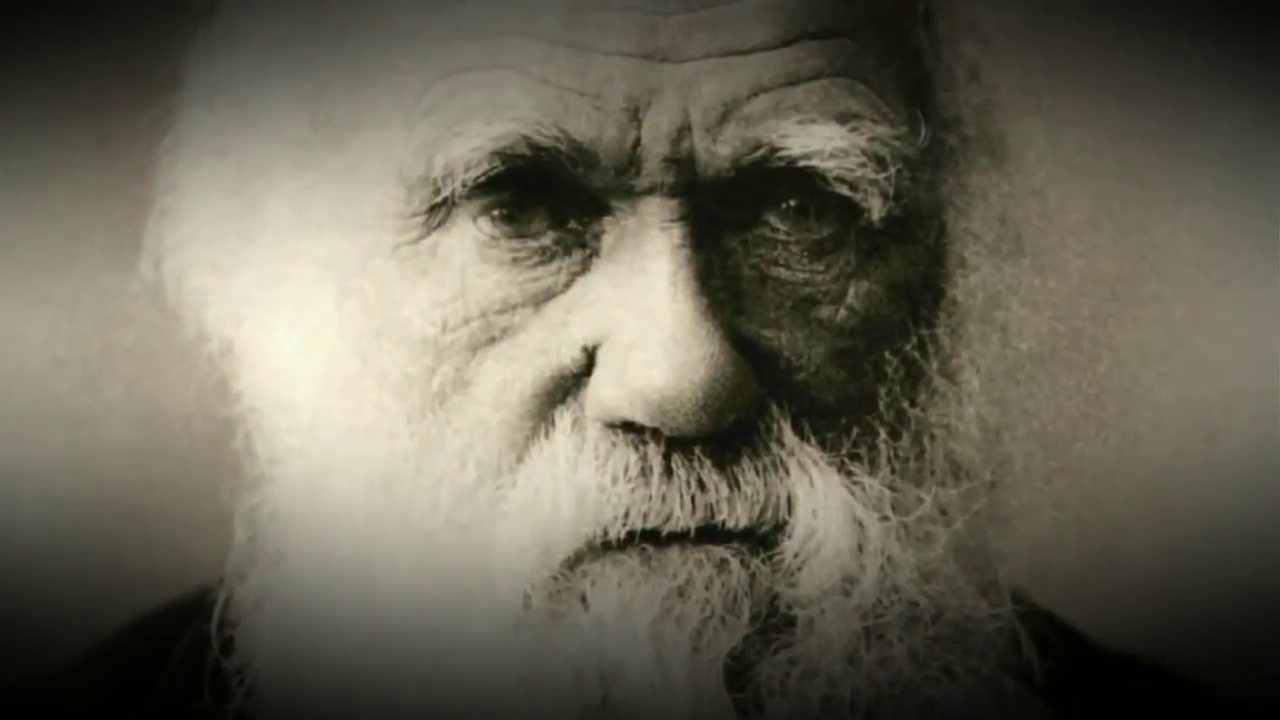
The theory of evolution - Darwin
Charles Darwin (1809-1882), English naturalist, developed an evolutionary theory that is the basis of modern synthetic theory: the theory of natural selection. According to Darwin, the organisms best adapted to their environment are more likely to survive than the less adapted, leaving a greater number of descendants. The organisms best adapted are thus selected for that environment.
The basic principles of Darwin's ideas can be summarized as follows:
- Individuals of the same species present variations in all the characters, not being therefore identical to each other.
- Every organism has great playability, producing many offspring. However, only some of the descendants reach adulthood.
- The number of individuals of a species is kept more or less constant over the generations
- Thus, there is great "fight" for life among the descendants, because although many individuals born just reach maturity, which keeps constant the number of individuals in the species.
- In the "fight" for life, organisms with variations favorable environmental conditions in which they live are more likely to survive compared to organizations with less favorable variations.
- Organisms with these beneficial changes are more likely to leave descendants. As there is transmission of parents of characters for children, these have such advantageous variations.
- Thus, over the generations, the action of natural selection on individuals maintaining or improving the degree of adaptation of these in half.
The synthetic theory of evolution
The synthetic theory of evolution or neo-Darwinism was formulated by several researchers during years of study, taking as essence Darwin's ideas about natural selection and incorporating current genetic concepts.
The single most important contribution of genetics, extracted from Mendel's work, replaced the old concept of heritage by mixing blood with the concept of inheritance through particles: genes.
The synthetic theory considers as Darwin had done, the population as evolutionary unit. The population can be defined as a grouping of individuals of the same species that occur in the same geographical area at the same time interval.
To better understand this definition, it is important to know the biological species concept: a group of natural populations, actually or potentially interbreeding and reproductively isolated from other groups of organisms.
When this definition, it is said potentially interbreeding, it means that a species may have populations that do not cross naturally because they are geographically separated. However, artificially placed in contact, there will be a cross between individuals, with fertile offspring. So they are potentially interbreeding.
The biological definition of species is only valid for organisms with sexual reproduction, as in the case of the similarities between morphological characteristics is defining the groups of species.
Observing the different populations of individuals with sexual reproduction, it can be noted that there is no individual alike. Execeções to this rule could be the monozygotic twins, but even they are not absolutely identical, although the initial genetic heritage be the same. This may occur because somatic changes due to the action of the medium.
The enormous diversity of phenotypes in a population is indicative of the genetic variability of this population may be noted that this is usually very wide.
The genetic understanding and phenotypic variability of individuals in a population is crucial for the study of evolutionary phenomena, since developments are actually statistical processing stocks over time, or even changes in the frequency of genes that population has.
The factors that determine changes in the frequency of genes are called evolutionary factors. Each population has a gene pool, which subject to evolutionary factors, can be changed. The gene pool of a population is the set of all genes present in this population. Thus, the greater genetic variability.
The evolutionary factors that act on the gene pool of the population have two categories that can be gathered:
- Factors that tend to increase the genetic diversity of the population: gene mutation, chromosome mutation, recombination;
- Factors that influence genetic variability established JAS: natural selection, migration and genetic drift.
The integration of these factors associated with geographical isolation may lead, over time to the development of reproductive isolation mechanisms, while, then, are new species.