Theory of Multiple Universes
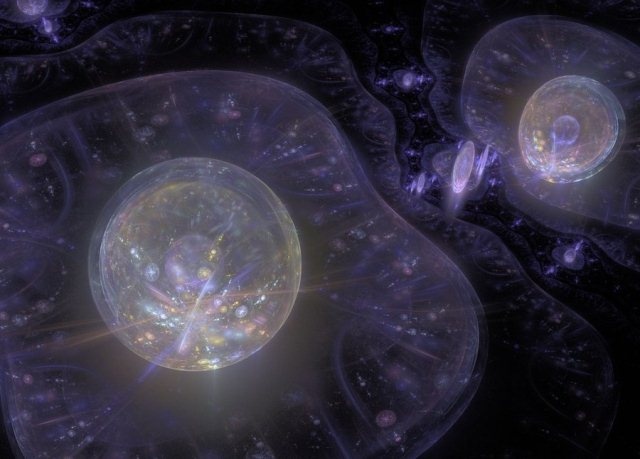
Theory of Multiple Universes
Parallel Worlds could explain the confusing Quantum theory :
The idea that an infinite number of parallel worlds could exist next to ours, is hard to accept, but a version of this theory so-called "Theory of many Worlds" (MWT - Many Worlds Theory) could provide us with an answer to another theory and rather controversial idea, the theory of quantum mechanics and its various interpretations. A professor of physics at Texas Tech University in Lubbock, name Bill Poirier proposed the theory that not only takes the idea of parallel worlds, but also shows that their interactions can explain all behavior of quantum mechanics in our observable universe.
< BR>
Poirier published this idea four years ago, but other physicists have recently started working on the idea and showed that this is mathematically possible. The last latest research was published on 23 October 2014 on journal Physical Review X .
Quantum Mechanics and the part of physics that describes the rules that govern the universe at the microscopic scale, tries to explain how sub-atomic particles can behave in two ways, as Particles and as a kind of waves. It also offers an explanation of why the particles appear to exist in multiple positions in space at the same time.
The 9 greatest mysteries unanswered in physics
This indistinct fog of possible positions is defined by a "wave of mathematical function " a mathematical equation that predicts the many points in space that a particle can occupy. But this mathematical function falls apart the moment someone measures the current position of the particle. At this point comes in the theory of many universes.
Hugh Everett was the first physicist to propose the possibility of a multiverse: - an infinite number of parallel universes that exist alongside ours. He published his "theory of many worlds" in the decade of the 1950s, but the idea was not well received in the academic world.
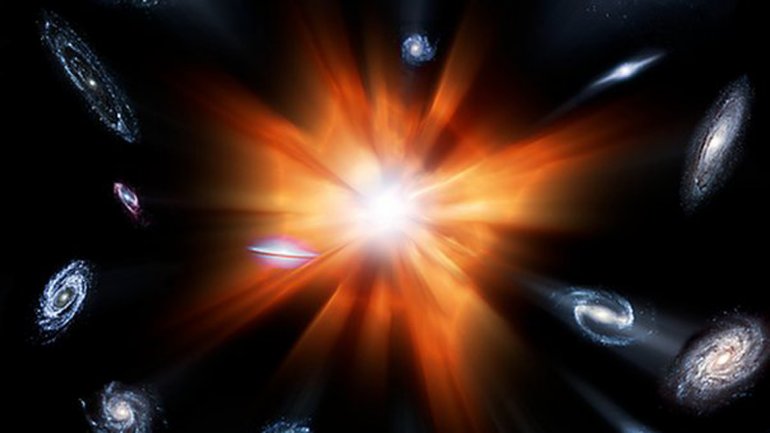
Infinite Univeres
Evered ended his career in physics shortly after getting his Ph.D., but many physicists now accept the idea of multiuniverse and parallel worlds more seriously. Poirier reviewed the many theories of parallel worlds and came to a less abstract known as "Theory of many interacting worlds" (MIW - Many Interacting Worlds theory). which will be able to help explain the confusing world of quantum mechanics.
Quantum Mechanics exist for over 100 years, but its interpretation is as controversial today as it was 100 years ago. Poirier wrote in his original thesis.
Albert Einstein was not a fan of quantum mechanics. The idea that a particle could exist in a haze of places, contrast possible with a defined location in space made no sense to him, and once he became famous for saying. "God does not play dice with the universe" However, this new MIW theory may have helped to calm Einstein's mind. MIW in theory, particles do not behave as quantum wave at any time. Each parallel world has particles with normal behavior and physical objects. The mathematical equation waves do not need to exist anymore.
In the new study which was built on top of the Poirier physical idea, Griffith University in Australia and University of California, Davis in California, demonstrated that it is necessary only two parallel worlds interacting and not a multitude of them, to produce the confused quantum behavior that physicists have observed. neighbors Worlds repel each other, the researchers wrote in a thesis. This repulsion force could explain bizarre quantum effects such as particles that can overcome barriers.
But for physicists to prove that we are living only one of millions of other possible worlds, or that these worlds interact? Poirier think will take some time to develop a way to test the idea.
"Experimental observations are the last test for any theory." Poirier said in an interview. "For now, Many Worlds that interact reach the same results as the general quantum theory, So all we can say at the moment is the result may be correct. A MIW theory may be right.
The authors of the new thesis hopes that expanding the MWI in theory led to ways to test it and more forward explain quantum mechanics.
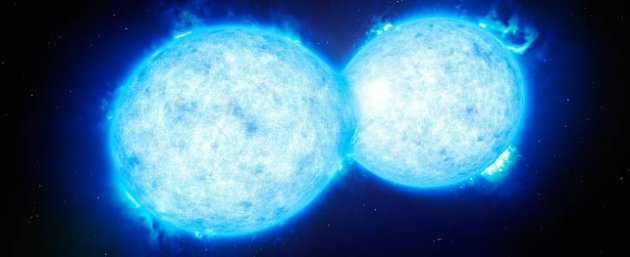
Double Star Blue giants
Richard Feynman, a physicist who worked on the Manhattan Project, once said: "I think I can say with all know for certain that no one understands quantum mechanics," but Poirier and his colleagues argue that the physical has a lot to gain by trying
.
5 reasons that explain why maybe we live in a multiverse
Images: The most beautiful equations of the world
The mysterious physics 7 things in our daily routine.
Copyright BEYTUDODEBOM.COM 2019