The first idea is usually attributed to the Epicureans, but its origins may be even older. The cosmogony Democritus is based on this idea, which he derived from Leucippus. According Daubeny, Mosco, a Phoenician who flourished before the Trojan War, would have these ideas, as well as monads of Pythagoras, whose origin was Egyptian.
According to Mr. Colebrooke, quoted by Daubeny, Hindus also had, in the past, an atomic theory. To The atomic theory of Epicurus, there was nothing but matter and space, and the matter formed by unbreakable geometric shapes, in various forms, such as round, square, lightning, etc., but in a finite number of different ways.
These atoms had two intrinsic properties of motion, a natural tendency to go down and the movement caused by their collisions that would make atoms turn away. In addition to these two movements, according to Epicurus, some atoms possess a third movement, which would let them down in slanting paths or curves.
The solids would be produced by these atoms when they were in compact form, however liquids, waxes, wood or vapor when they were less compact.
Atoms should be infinitely stiff and inelastic, so when there was a collision of two coming atoms in the opposite direction, they should immediately stop their movement, it would go to a fast moving state to a resting state, contrary to the law of continuity, for which no change can occur abruptly, without passing through intermediate stages.
The arguments of the Cartesian against the atomic theory is based on mathematics, because no body, from a mathematical point of view, can be considered indivisible.
Abbé Boscovich, a disciple of Leibnitz, proposed that all matter was composed of points (in the mathematical sense) that repel when they were very close, but that would attract very distant. To explain the properties of water (in its three states), Boscovich assumed that two water particles would repel when very close, and there, according to the distance separating them, regions where there are attraction and regions where there would be repulsion.
The first step in the discovery of this law was given by German chemist Wenzel that work with Lehre von den Verwandschaften, published in 1777 Dresden, showed that when two neutral salts react with each other, the result is two other neutral salts, in which proportions of the constituents are retained.
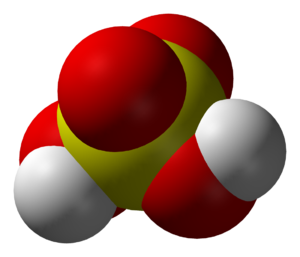
Thus, it is observed that there is a symmetry in the reaction, 21 5 grams of silver nitrate are the result of neutralization of 6.75 grams of nitric acid with 9.75 grams of barium oxide and 14.75 grams of barium sulfate are the result of neutralization of 5 grams of sulfuric acid with 9.75 grams of barium oxide.
With this, it is shown that 5 grams of sulfuric acid is equivalent to 6.75 grams of nitric acid, and 14.75 grams of silver oxide 9.75 barium oxide. [Note 5] Analogously, the same schema It can be used to analyze the reaction 21.5 grams of silver nitrate with 7.5 grams of anhydrous sodium phosphate, resulting in 10.75 grams of sodium nitrate and 18.25 grams of silver phosphate.
The conclusion is that 5 grams sulfuric acid, nitric acid and 6.75 to 3.5 equivalents of phosphoric acid, and 4 grams of sodium oxide, 9.75 for barium oxide and silver oxide 14.75 .
Richter, a Prussian chemist, expanded the work of Wenzel, and put all the chemicals in a single scale measuring their relative abilities saturation of acids and bases, making the chemical, which until then had only been a qualitative science, become a quantitative science. The text Richer, published in 1792, was called Anfangsgründe der Stoichiometrie.
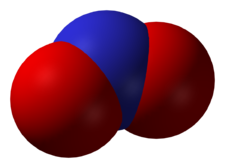
The next step was given by Mr. Higgins, who, in 1789, work entitled A Comparative View of the phlogistic and anti-phlogistic Theories proposed that the difference between the sulphurous acid and sulfuric acid is that, at first, a particle sulfur combines with oxygen of the particle, while the second, the particle sulfur combines with oxygen two. Furthermore, the compounds of nitrogen and oxygen, these are combined in the proportions of 1 to 1,2,3,4 and 5.