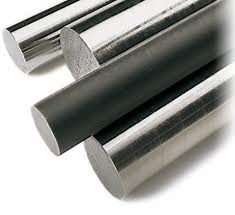
Iron twenty-sixth element of the Periodic Table
Iron (from the Latin ferrum) is a chemical element, symbol Fe, atomic number 26 (26 protons and 26 electrons) and atomic mass 56 u. At room temperature, iron is in the solid state. It is extracted from nature in the form of iron ore which, after moving to the pig iron stage through transformation processes, is used in the form of ingots. By controlling carbon content (carbon occurs naturally in iron ore), it gives rise to various forms of steel.This transition metal is found in group 8 (VIIIB) of the Periodic Classification of Elements. It is the fourth most abundant element in the earth's crust (approximately 5%) and, among metals, only aluminum is most abundant.
It is one of the most abundant elements in the universe; Earth's core is made up mainly of iron and nickel (NiFe). This iron is at a temperature well above Curie's iron temperature, so the Earth's core is not ferromagnetic.
Iron has been historically important, and a period of history has been called the Iron Age. Iron is currently used extensively for the production of steel, metal alloys for the production of tools, machines, transport vehicles (cars, ships, etc.) as a structural element of bridges, buildings and a multitude of other
applications.
It is a tenacious and tenacious silver-gray metal with magnetic properties; It is ferromagnetic at room temperature, as well as nickel and cobalt. Steel is the most commonly used iron alloy, and this is the most common use. The steels are iron alloys with other metallic and non-metallic elements that give different properties to the material. Steel is considered an iron alloy containing less than 2% carbon; if the percentage is higher, it is called cast iron.
Ferrous alloys have a wide variety of mechanical properties, depending on their composition and the treatment applied.
One of the drawbacks of iron is that it oxidizes easily. There are a number of steels to which other binder elements, especially chromium, are added to make them more corrosion resistant. These are called stainless steels. When the carbon content of the alloy is greater than 2.1% by weight, the metal alloy is referred to as cast iron. These alloys generally have from 3% to 4.5% carbon by weight. There are several types of cast iron: gray, spheroidal, white and malleable. Depending on the type has different applications: in engines, valves, gears and others.
On the other hand, iron oxides have several applications: in paints, iron obtaining and others. Magnetite (Fe3O4) and iron oxide III (Fe2O3) have magnetic applications.
There is evidence that iron was known before 5000 BC The first iron objects used by mankind are siderite ornaments made in Egypt around 4000 BC The discovery of the smelter around 3000 BC led to the beginning of the Iron Age. around 1200 BC and prominent use of iron for tools and weapons.
More and more iron objects dating from the second and third millennium BC were found (these are distinguished from meteorite iron by the absence of nickel) in Mesopotamia, Anatolia, and Egypt. However, its use was probably intended for ceremonial purposes because it was a very expensive metal rather than gold at the time. Some sources suggest that iron may have been obtained as a byproduct of copper.