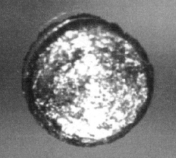
Californium Ninety-eighth Element of the Periodic Table
The Californium (named after the State and the University of California) is a chemical element of Cf symbol, atomic number 98 (98 protons and 98 electrons) and atomic mass equal to [251] u. It is a metallic, synthetic, transuranic, solid element, probably silver in appearance, found in the actinide group of the periodic table of elements.
It was discovered in 1950 by a team of US researchers at the University of California, Berkeley, bombarding the curium element with alpha particles.
Its main use is as a neutron source for the analysis of terrestrial soil or other planets through space probes. It is the most expensive metal that can be bought, costing about 2 billion reais per kilo.
History:
Californium was first synthesized at the University of California, Berkeley, by researchers Stanely Thompson, Kenneth Street, Jr., Albert Ghiorso, and Glenn T. Seaborg in 1950. It was the sixth transuranic element discovered, announcing the feat on March 17. from 1950.
This element was named after the US state of California and the University of California: It is suggested that element 98 is given the name californium (symbol Cf) after the university and state where the work was done. This name, chosen for the given reason, does not reflect the observed chemical homology of element 98 to dysprosium (No. 66) as the names americium (No. 95), curium (No. 96), and berkelium (No. 97) signify that these elements are the chemical homologs of europium (No. 63), gadolinium (No. 64), and terbium (No. 65), respectively.
To produce element 98, the team bombarded an alpha-particle (35 MeV) curium-242 target on a Berkeley cyclotron, yielding californium-245 atoms (44-minute half-life) with release of a neutron.
Key Features:
Quantities of synthetically obtained californium made it possible to determine some macroscopic properties of this element. Californium-252 (2.6-year half-life) is a strong neutron emitter, so extremely radioactive and harmful (one milligram spontaneously emits 170 million neutrons per minute). California-254 decay (556 day half-life) may have been detected through telescopes in supernova debris. Californium-249 is the result of beta decay of berkelium-249 and most other isotopes of californium are produced by subjecting berkelium to intense neutrons in a nuclear reactor. California has some special uses because of its radioactive element condition, but it is too difficult to obtain to produce any significant use. Three of your few
applications are:
Used to find layers of water and oil in oil wells. as a portable neutron source, has become useful in neutron activation analysis processes, can be used as a radiation source in radiology (medicine), surface analysis of other planets through space probes, and in discovery and analysis of gold and silver for land prospecting. as a source of neutrons in nuclear reactors.
So far, Californium has not been isolated in its metallic form. The only californium ion that is stable in aqueous solution is californium III. The californium has no biological role, and only some compounds were obtained and studied. These include: californium oxide (Cf2O3), californium trichloride (CfCl3) and californium oxychloride (CfOCl).
The crystal structure of two californium compounds was determined in 1962 by J.C. Wallman and Cunningham.
Physical Properties:
Californium is an actinide silver-white metal 2 with a melting point of 900 ± 30 ° C and an estimated boiling point of 1745 ° C. 3 The pure metal is malleable and can be easily cut with a razor blade. California begins to vaporize above 300 ° C when exposed to vacuum. 4 Below -220 ° C the metal is either ferromagnetic or ferrimagnetic californium (acts as a magnet), between 48 and 66 K which is antiferromagnetic (an intermediate state), and above 160 K (-110 ° C) is paramagnetic ( external magnetic fields can become magnetic). 5 It forms alloys with lanthanide metals but little is known about them.
The element has two crystalline forms under a standard pressure atmosphere: The double-hexagonal narrow-packed shape nicknamed alpha (α) and a centered face cubic shape designated beta (β) [b] The α form exists below 900 ° C with a density of 15.10 g / cm3 and the β form exists above 900 ° C with a density of 8.74 g / cm3. 6 to 48 GPa changes pressure β form in an orthorhombic crystalline system due to relocation phenomena of the 5f atom electrons, which free them from bonding. 7th
The modulus of elasticity of a bulk material is a measure of its uniform pressure resistance. Californium bulk modulus is 50 ± 5 GPa, which is similar for trivalent lanthanide metals, but smaller than most known metals such as aluminum (70 GPa).
Applications:
Californium-252 has a number of specialized applications as a strong neutron emitter, and each microgram of fresh californium produces 139,000,000 neutrons per minute. 11 This property makes California useful as a source of initial neutrons for some nuclear reactors 12, and as a portable (non-base reactor) neutron source for neutron activation analysis to detect small amounts of sample elements. 13 Californian neutrons are used as a treatment for certain cervical and brain cancers, where traditional radiation therapy is ineffective. 14 It has been used in educational applications since 1969, when the Georgia Institute of Technology received a 119-mcg loan of California-252 from the Savannah River Plant. 15 It is also used with online elemental coal analyzers and bulk material analyzers in the coal and cement industries.
Neutron penetration into materials makes the californium useful in detection instruments such as rod fuel scanners; 16 neutron radiography of aircraft components and weapons to detect corrosion, bad welds, cracks and trapped moisture; 17 and in portable metal detectors 18 neutron moisture meters use californium-252 to find water and oil layers in oil wells, as a portable neutron source for gold and silver prospecting for local analysis, 19 and for detecting the water movement in the soil. 20 The major uses of californium-252 in 1982 were, in order of use, a starter reactor (48.3%), sweep rod fuel (25.3%), and activation analysis (19, 4%). [62] In 1994 more California-252 was used in neutron radiography (77.4%), with scanning fuel rod (12.1%) and start-up reactor (6.9%) as important, but distant side uses. 21
Californium-251 has a very small critical mass (about 5 kg), high lethality and a relatively short period of toxic radiation to the environment. California's low critical mass has led to some exaggerated claims about possible uses for the element.
In October 2006, researchers announced that three Ununoctium atoms (element 118) had been identified at the Dubna Joint Research Institute in Russia as the product of calcium-48 bombardment of californium-249, making it the heaviest element ever synthesized before. The target of this experiment contained about 10 mg of californium-249 deposited on a 32 cm2 area titanium sheet. 23 24 25 The Californium has also been used for the production of other transuranic elements. For example, the element 103 (later called lawrencium) was first synthesized in 1961, bombarding Californium with boron nuclei. 26
It was discovered in 1950 by a team of US researchers at the University of California, Berkeley, bombarding the curium element with alpha particles.
Its main use is as a neutron source for the analysis of terrestrial soil or other planets through space probes. It is the most expensive metal that can be bought, costing about 2 billion reais per kilo.
History:
Californium was first synthesized at the University of California, Berkeley, by researchers Stanely Thompson, Kenneth Street, Jr., Albert Ghiorso, and Glenn T. Seaborg in 1950. It was the sixth transuranic element discovered, announcing the feat on March 17. from 1950.
This element was named after the US state of California and the University of California: It is suggested that element 98 is given the name californium (symbol Cf) after the university and state where the work was done. This name, chosen for the given reason, does not reflect the observed chemical homology of element 98 to dysprosium (No. 66) as the names americium (No. 95), curium (No. 96), and berkelium (No. 97) signify that these elements are the chemical homologs of europium (No. 63), gadolinium (No. 64), and terbium (No. 65), respectively.
To produce element 98, the team bombarded an alpha-particle (35 MeV) curium-242 target on a Berkeley cyclotron, yielding californium-245 atoms (44-minute half-life) with release of a neutron.
Key Features:
Quantities of synthetically obtained californium made it possible to determine some macroscopic properties of this element. Californium-252 (2.6-year half-life) is a strong neutron emitter, so extremely radioactive and harmful (one milligram spontaneously emits 170 million neutrons per minute). California-254 decay (556 day half-life) may have been detected through telescopes in supernova debris. Californium-249 is the result of beta decay of berkelium-249 and most other isotopes of californium are produced by subjecting berkelium to intense neutrons in a nuclear reactor. California has some special uses because of its radioactive element condition, but it is too difficult to obtain to produce any significant use. Three of your few
applications are:
Used to find layers of water and oil in oil wells. as a portable neutron source, has become useful in neutron activation analysis processes, can be used as a radiation source in radiology (medicine), surface analysis of other planets through space probes, and in discovery and analysis of gold and silver for land prospecting. as a source of neutrons in nuclear reactors.
So far, Californium has not been isolated in its metallic form. The only californium ion that is stable in aqueous solution is californium III. The californium has no biological role, and only some compounds were obtained and studied. These include: californium oxide (Cf2O3), californium trichloride (CfCl3) and californium oxychloride (CfOCl).
The crystal structure of two californium compounds was determined in 1962 by J.C. Wallman and Cunningham.
Physical Properties:
Californium is an actinide silver-white metal 2 with a melting point of 900 ± 30 ° C and an estimated boiling point of 1745 ° C. 3 The pure metal is malleable and can be easily cut with a razor blade. California begins to vaporize above 300 ° C when exposed to vacuum. 4 Below -220 ° C the metal is either ferromagnetic or ferrimagnetic californium (acts as a magnet), between 48 and 66 K which is antiferromagnetic (an intermediate state), and above 160 K (-110 ° C) is paramagnetic ( external magnetic fields can become magnetic). 5 It forms alloys with lanthanide metals but little is known about them.
The element has two crystalline forms under a standard pressure atmosphere: The double-hexagonal narrow-packed shape nicknamed alpha (α) and a centered face cubic shape designated beta (β) [b] The α form exists below 900 ° C with a density of 15.10 g / cm3 and the β form exists above 900 ° C with a density of 8.74 g / cm3. 6 to 48 GPa changes pressure β form in an orthorhombic crystalline system due to relocation phenomena of the 5f atom electrons, which free them from bonding. 7th
The modulus of elasticity of a bulk material is a measure of its uniform pressure resistance. Californium bulk modulus is 50 ± 5 GPa, which is similar for trivalent lanthanide metals, but smaller than most known metals such as aluminum (70 GPa).
Applications:
Californium-252 has a number of specialized applications as a strong neutron emitter, and each microgram of fresh californium produces 139,000,000 neutrons per minute. 11 This property makes California useful as a source of initial neutrons for some nuclear reactors 12, and as a portable (non-base reactor) neutron source for neutron activation analysis to detect small amounts of sample elements. 13 Californian neutrons are used as a treatment for certain cervical and brain cancers, where traditional radiation therapy is ineffective. 14 It has been used in educational applications since 1969, when the Georgia Institute of Technology received a 119-mcg loan of California-252 from the Savannah River Plant. 15 It is also used with online elemental coal analyzers and bulk material analyzers in the coal and cement industries.
Neutron penetration into materials makes the californium useful in detection instruments such as rod fuel scanners; 16 neutron radiography of aircraft components and weapons to detect corrosion, bad welds, cracks and trapped moisture; 17 and in portable metal detectors 18 neutron moisture meters use californium-252 to find water and oil layers in oil wells, as a portable neutron source for gold and silver prospecting for local analysis, 19 and for detecting the water movement in the soil. 20 The major uses of californium-252 in 1982 were, in order of use, a starter reactor (48.3%), sweep rod fuel (25.3%), and activation analysis (19, 4%). [62] In 1994 more California-252 was used in neutron radiography (77.4%), with scanning fuel rod (12.1%) and start-up reactor (6.9%) as important, but distant side uses. 21
Californium-251 has a very small critical mass (about 5 kg), high lethality and a relatively short period of toxic radiation to the environment. California's low critical mass has led to some exaggerated claims about possible uses for the element.
In October 2006, researchers announced that three Ununoctium atoms (element 118) had been identified at the Dubna Joint Research Institute in Russia as the product of calcium-48 bombardment of californium-249, making it the heaviest element ever synthesized before. The target of this experiment contained about 10 mg of californium-249 deposited on a 32 cm2 area titanium sheet. 23 24 25 The Californium has also been used for the production of other transuranic elements. For example, the element 103 (later called lawrencium) was first synthesized in 1961, bombarding Californium with boron nuclei. 26