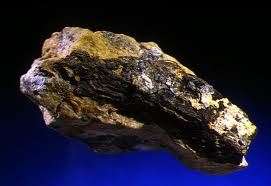
Arsenic thirty-third element of the Periodic Table
Arsenic, the chemical element of the As symbol and atomic number 33, is often considered a semimetal or metalloid because it has physical and chemical characteristics pertaining to both metals and nonmetals. However, as the metalloid group is not clearly defined, the new periodic tables classify it as nonmetal.It has atomic mass 75 u and is solid under ambient conditions. Its appearance varies according to the allotropic state in which it is found: metallic gray (α, more stable form) for the rhombohedral state, yellow for the state in which arsenic vapor undergoes rapid cooling (γ form) or black (β form). Among these states, only metallic gray has brilliance and phosphorescence yellow. And arsenic α is the only one to be an intermediate conductor of electricity; the others are bad drivers.
Isolated Arsenic: Its consumption is extremely harmful, and the recommended intake is at most 15μg. Since this amount should not be inserted into the body with pure arsenic, but naturally in the consumption of red meat, fish and crustaceans.
An extra dose of arsenic can range from vomiting and indisposition to cancer. The main reason why many people are contaminated with this element is the consumption of groundwater extracted from unsupervised wells. A great example of this was mass contamination in Bangladesh (India), where an estimated 20 to 75 million arsenic-infected people are found in drinking water.
Occurrence:
Arsenic is very rare and not pure in nature but in the form of sulfides and antimony ores. Its -3, +3 and +5 oxidation states make it highly reactive with chlorine and other oxidizing substances (such as nitric acid).
In Brazil, it is found in pyrites (iron and sulfur ores) in gold deposits, especially in the state of Minas Gerais. In the rest of the world the greatest evidence of arsenic is through arsenic trisulphide (As2S3) - gold pigment - and arsenic disulphide (As2S2) - royalgar.
Discovery:
German theologian and philosopher: Alberto Magno - devoted himself to the study of arsenic in 1250.
Fonts:
http://en.wikipedia.org/wiki/Arsenio (accessed 16/02/2010)
http://en.wikipedia.org/wiki/Alberto_Magno (accessed 16/02/2010)
http://en.wikipedia.org/wiki/Tarsenium trioxide (accessed 16/02/2010)
http://www.tabela.oxigenio.com/nao_metais/element_quimico_arsenio.htm (accessed 16/02/2010)
http://www.cq.ufam.edu.br/Artigos/arsenio/arsenio.html (accessed 16/02/2010)
http://www.brasilescola.com/quimica/arsenio.htm (accessed 16/02/2010)
http://www.colomboglass.com/tempered-glass.htm